What Are the Main Stainless Steel Sheet Finishes?
Stainless steel surface finishes are standardized globally to ensure consistency in reflectivity, roughness (Ra values), and mechanical fabrication performance. The table below outlines the primary finishes recognized under international manufacturing standards:
| Finish | How it is made | Look | Typical uses |
|---|---|---|---|
| No.1 (HR) | Hot rolled, annealed and pickled | Dull, rough, matte grey | Thick plates, tanks, industrial equipment, heat-resistant parts |
| 2D | Cold rolled, annealed and pickled | Dull, non-reflective, even | Deep-drawn parts, components that will be coated or finished later |
| 2B | Cold rolled, annealed, pickled and lightly skin-passed | Smooth, moderately reflective | The most common general-purpose finish; also the base for polishing |
| BA | Cold rolled and bright annealed in a protective atmosphere | Highly reflective, bright | Appliances, trims, reflectors, architectural panels |
| No.4 | Mechanically polished to a directional grain | Brushed satin | Kitchen equipment, food service, lift interiors, wall panels |
| Hairline (HL) | Polished with a long continuous line pattern | Fine linear brushed look | Architectural cladding and decorative panels |
| No.8 / 8K | Polished with progressively finer abrasives, then buffed | Mirror, very reflective | Decorative panels, signage, lift cabins, high-end interiors |
Finish names follow ASTM A480 and EN 10088-2 conventions. “8K” is a trade term for the mirror finish, so confirm what a supplier means by it when specifying decorative cladding.
How Are Finishes Created?
Mill finishes (No.1, 2D, 2B, BA) are produced during rolling, annealing and pickling at the steel mill. Polished and decorative finishes (No.4, hairline, 8K) are made afterwards by mechanical polishing, usually starting from a 2B sheet. Coloured Physical Vapor Deposition (PVD) and etched finishes are applied after that, creating specialty architectural surfaces like those available in our Decorative Stainless Steel Sheets Portfolio.
2B vs. BA: What Is the Difference?
Both are cold-rolled and smooth, but BA is annealed in a protective atmosphere (typically hydrogen or nitrogen gas), which avoids the oxide scale layer that has to be acid-pickled off 2B. The result is a brighter, more reflective surface. It is not as perfect as a mechanically polished 8K mirror. Choose 2B when you need an economical, versatile finish for fabrication or stamping, and BA when reflectivity matters but full mirror polishing isn’t needed.
When Should You Choose No.4, Hairline or 8K?
No.4 (Brushed Satin):
Hides fingerprints and minor scratches, and is widely used where equipment gets handled and cleaned often, such as commercial kitchens, beverage counters, and elevators.
Hairline (HL):
Features a finer, more continuous linear grain pattern produced with specialized grit belts that creates a subtle, elegant texture for premium architectural facades and lobby walls.
8K Mirror:
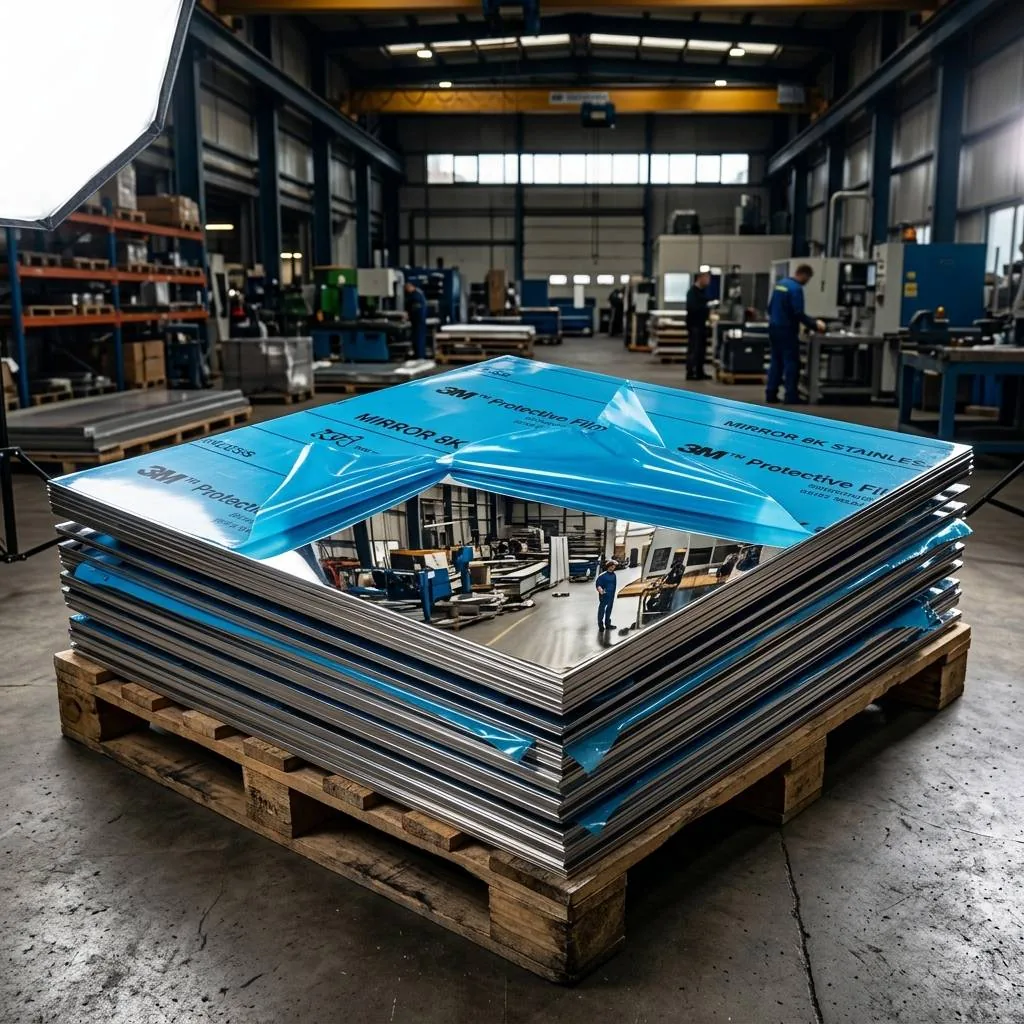
The most reflective choice available in metal panels. Because it displays reflections with optical clarity, it shows fingerprints, smudges, and any substrate distortion, requiring careful handling and maintenance.
How Do You Choose the Right Finish?
- Environment: For coastal or humid locations, the base metal grade matters more than the finish. Specify SS 304 Sheets for inland architecture, or SS 316L Marine Plates within 5 km of coastlines. A smoother surface (like BA or electropolished) also helps shed airborne salts and resist staining. If considering lower-cost grades for interior use, review our SS 202 vs SS 304 Comparison.
- Appearance: Decide whether your design aesthetic requires matte (2B), directional satin (No.4 / Hairline), or specular reflection (8K Mirror).
- Handling and Cleaning: Brushed finishes hide everyday wear and contact marks significantly better than high-gloss mirror panels.
- Fabrication: Deep drawing, press braking, and roll forming usually start from 2B or 2D sheets. High-end polishing is typically performed after forming where complex geometries are involved.
- Protective Film: Keep protective laser-compatible PE film intact throughout cutting, bending, and transport, removing it only upon final site installation.
Practical Engineering Tips:
Always match the grain direction across all adjacent panels in a project to prevent optical shading mismatches. Furthermore, communicate the target grade, thickness, and finish to your supplier upfront, because not every finish is standard across heavy-gauge plate stock.