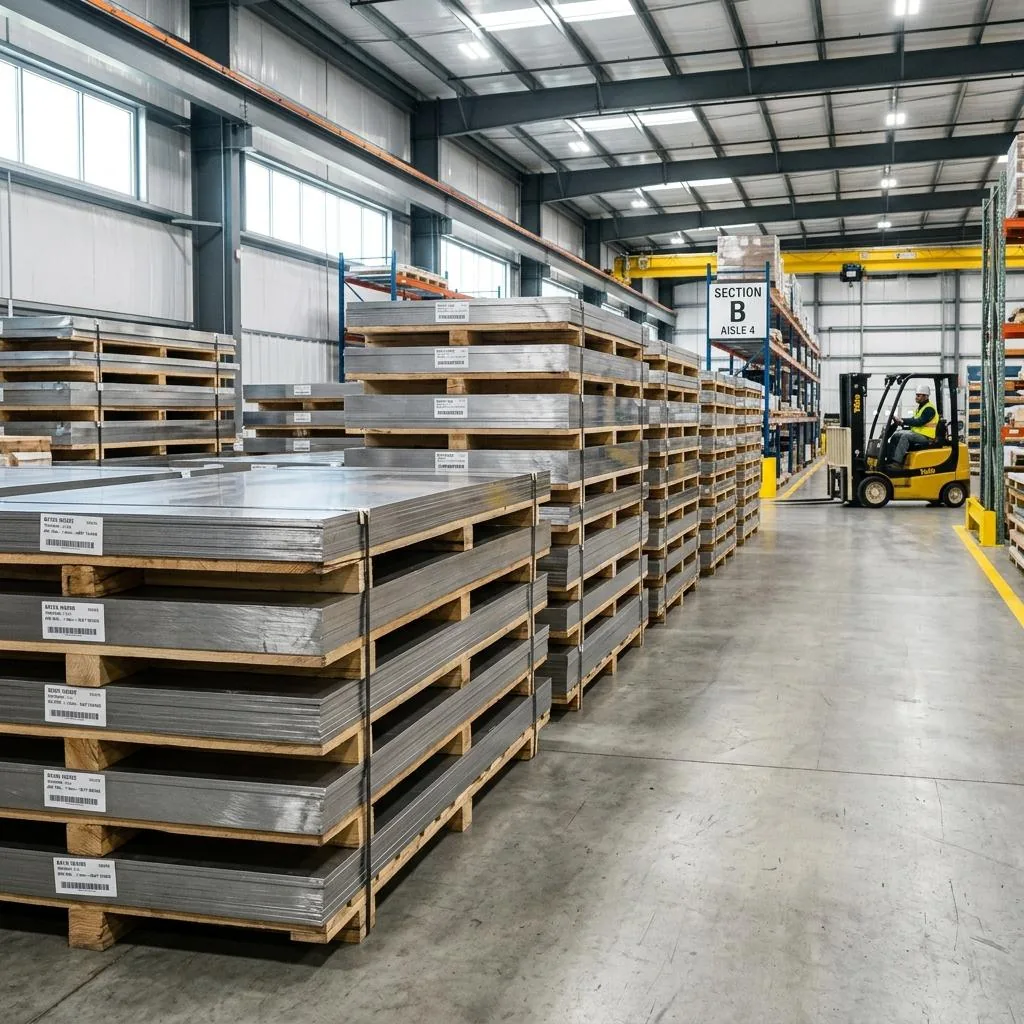
If you have ever asked three dealers for a stainless steel sheet price and received three different numbers, you are not alone. There is no single fixed rate for SS sheets in India. The price per kg moves with the grade, the mill, the finish, the thickness and the market. This guide explains what actually decides the rate, so you can compare quotes properly instead of just picking the lowest number.
The Main Factors Behind SS Sheet Price
1. Grade and Nickel Content
SS 304 contains roughly 8 to 10.5 percent nickel, while SS 202 is a 200-series grade where part of the nickel is replaced by manganese and nitrogen. Nickel is the most expensive input, which is why SS 202 usually costs less than SS 304. Changes in the global nickel market feed directly into the price of 304.
2. Mill and Quality
Sheets from different mills are not priced the same. Prime-quality material with proper traceability costs more than non-prime or unmarked stock. Always ask for the mill name and a Mill Test Certificate (EN 10204 3.1) so you know what you are paying for.
3. Finish
A standard 2B finish is cheaper than BA, No.4 (brushed) or 8K mirror, because the extra polishing adds cost. Decorative finishes such as PVD colour coating or etching are priced separately again. See our guide on stainless steel sheet finishes for details.
4. Thickness and Size
Very thin and very thick sheets can carry different premiums. Standard sizes like 4 × 8 ft and 5 × 10 ft are easier to source than special sizes. The price per kg may be the same, but the price per sheet depends on the weight.
5. Quantity and Cutting
Full sheets cost less per kg than cut-to-size pieces, and larger orders usually get better rates. Shearing or laser cutting adds labour and creates offcuts.
6. Timing
Prices change with the nickel market and mill price revisions, so a quote is valid only for a short time. This is why reputable dealers quote with a validity period.
7. Taxes, Freight and Payment Terms
GST, transport to your site and credit terms all change the final amount. Always check whether a quoted rate includes them.
How to Compare Two Quotes Fairly
Before deciding, make sure both quotes match on:
- Grade and standard (for example SS 304, ASTM A240)
- Thickness and the tolerance allowed
- Finish (2B, BA, No.4, 8K)
- Mill or brand, and whether the material is prime
- Mill Test Certificate provided or not
- GST, freight and loading included or not
- Quote validity and payment terms
💡 Buyer Tip
A quote that is far below the others usually differs on one of these points, most often mill quality, thickness tolerance or missing certificates.
Why SS 202 Costs Less Than SS 304
The lower nickel content makes SS 202 more affordable. It is a good choice for indoor decorative work, utensils and general fabrication away from moisture and chlorides. For kitchens, food contact, outdoor or coastal use, SS 304 (or 316L in harsher conditions) is the safer choice. For a detailed comparison, read our guide: SS 202 vs SS 304: Differences, Uses and Which Grade to Buy.
Get Today's Rate
Tell us the grade, thickness, size, finish and quantity, and we will send a quote with Mill Test Certificate details. See our pages for SS 304 sheets and SS 202 sheets (Jindal J1, J4), or contact us for a quote.